

Vietnam Air Defence - Air Force
| Air Defence - Air Force Service | |
|---|---|
| Quân chủng Phòng không - Không quân | |
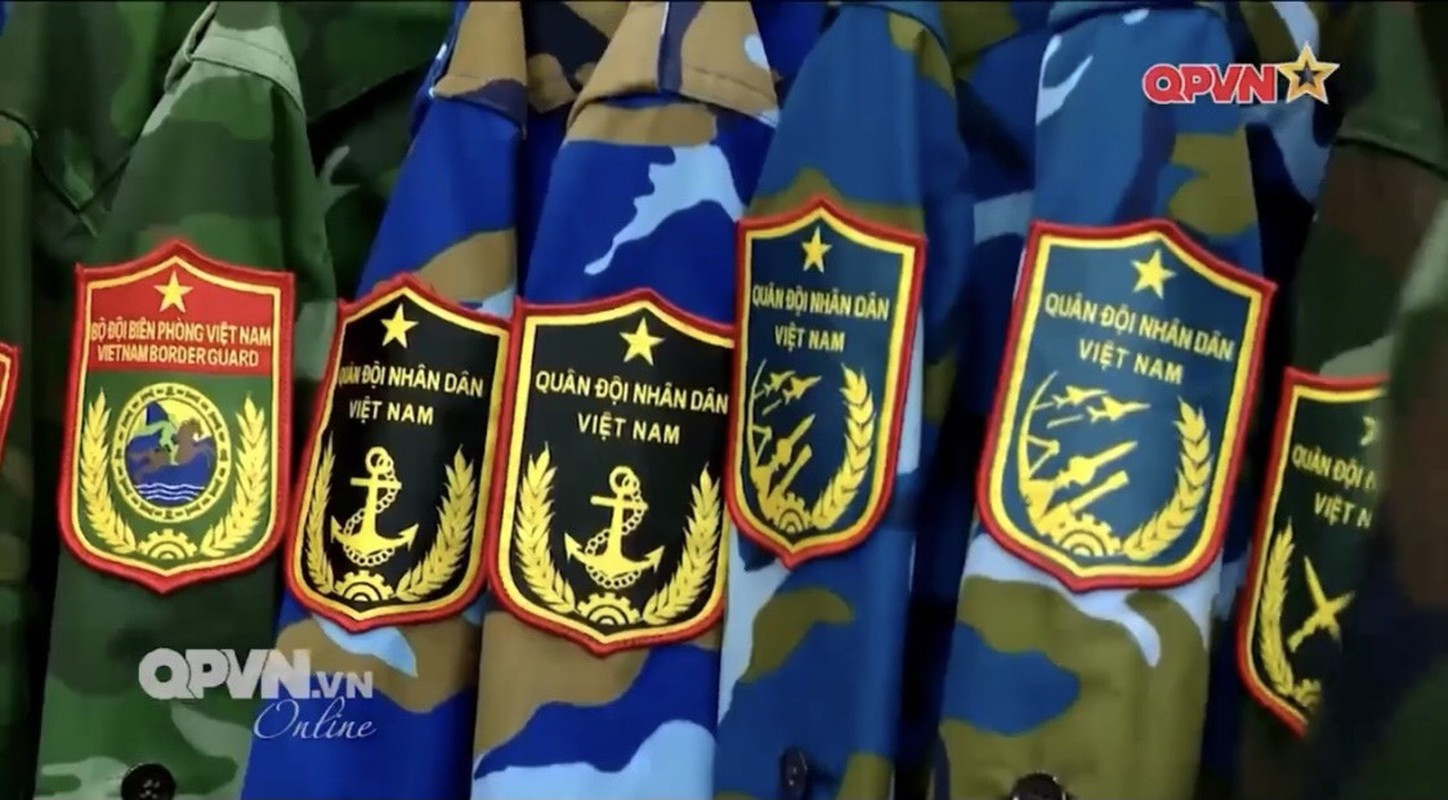
 Insignia of the Air Defence - Air Force[1] | |
| Founded | 24 January 1955 Current formation: from 1999 (merger of Air Force Service and Air Defence Service) |
| Country |  Socialist Republic of Vietnam (since 1976) Socialist Republic of Vietnam (since 1976) North Vietnam (1955-1976) North Vietnam (1955-1976) |
| Allegiance |  Communist Party of Vietnam[2] Communist Party of Vietnam[2] |
| Type | Air force Space force |
| Role | |
| Size |
|
| Part of |  People's Army of Vietnam People's Army of Vietnam |
| Headquarters | Hanoi |
| Nicknames |
|
| Colours | Azure, Dark Green |
| March | Hành Khúc Không Quân Việt Nam (Air Force marches) |
| Anniversaries |
|
| Engagements | |
| Decorations | |
| Battle honours | |
| Website | phongkhongkhongquan |
| Commanders | |
| Commander-in-Chief | President Lương Cường |
| Commander | Major General Vũ Hồng Sơn[3] |
| Political Commissar | Lieutenant General Trần Ngọc Quyến |
| Insignia | |
| Roundel |  |
| Flag |  |
| Aircraft flown | |
| Bomber | Su-22 |
| Fighter | Su-27, Su-30MK2 |
| Multirole helicopter | Mi-8, Mi-17/-171 |
| Trainer | Yak-52, L-39C, L-39 Skyfox, Yak-130, Su-22M3K, Su-27UBK |
| Transport | NC212i, C-295M, Antonov An-2 |
The Vietnam Air Defence - Air Force (Vietnam ADAF[4] or VN ADAF;[5] Bộ đội Phòng không - Không quân Việt Nam), officially the Air Defence - Air Force Service (ADAF Service; Quân chủng Phòng không - Không quân (Quân chủng PK-KQ / QC PK-KQ / PKKQ)), also commonly known as the Vietnam People's Air Force (VPAF; Không quân nhân dân Việt Nam (KQNDVN)) or the Vietnam Air Force (Không quân Việt Nam (KQVN)), is the air and anti-air warfare service branch of Vietnam. It is the modern incarnation of the so-called North Vietnamese Air Force (NVAF) and absorbed the South Vietnamese Air Force (RVNAF/VNAF) following the reunification of Vietnam in 1975. It is one of three main branches of the People's Army of Vietnam, which is under the executive administration of the Ministry of National Defence. The main mission of the ADAF is the defence of Vietnamese aerospace and the provision of air and space cover for operations of the People's Army of Vietnam.
The modern ADAF consists of two principle components: the Air Defence (AD; Phòng không, mainly operating air-defence radars, anti-air artillery and missile systems) and the Air Force (AF; Không quân, mainly operating aerial vehicles and military aircraft for combat and transport) that are currently organized as separate divisions under the ADAF Headquarters. From 1977 to 1999, the components were split into two different service branches, before remerging as the existing unified ADAF Service in 1999, placing both components under a unified leadership to facilitate joint operations.[6] The common name Vietnam People's Air Force (VPAF; Không quân nhân dân Việt Nam) was largely the name for the Air Force component only, especially during the days that the two AD and AF services were structured two separate service branches. VPAF later became a relatively-common "external" name for the unified service which implicitly includes the AD branch; however, this usage rarely appears in official context, especially when the AD component never refer itself as the "Air Force", while the VPAF designation is currently used in a limited manner among AF units. Hence, interchangeably calling the Vietnamese ADAF as "the VPAF" can be considered a misconception about the nature and formation of the service branch.
History
[edit]Early years
[edit]The first aircraft in service for the Vietnamese Armed Forces were two trainers, a de Havilland Tiger Moth and a Morane-Saulnier, which were initially the private property of the emperor Bảo Đại.[7] In 1945, Bảo Đại gave the aircraft to the Vietnamese government. Until 1950, even though the Vietnam People's Army (VPA) had acquired credible offensive capabilities on the ground, it was almost powerless against reconnaissance or attacking operations from the French Expeditionary Air Force. On 9 March 1949, General Võ Nguyên Giáp was authorised to establish the Air Force Research Committee (Ban Nghiên cứu Không quân) under the General Staff to study ways to deal with the air war. The first Vietnamese service aircraft flight was made by the Tiger Moth on 15 August 1949.[7] A small-scale training was carried out in the following years.
Further development of aviation in North Vietnam began in 1956, when a number of trainees were sent to the USSR and China for pilot training. They were organised into two groups, pilots and mechanics, respectively; and among others, utilised the Czechoslovak Zlín Z-226 and Aero Ae-45. The first unit of the VPAF was the No. 919 Transport Regiment (Trung đoàn Không quân Vận tải 919), organised on 1 May 1959, with An-2, Li-2, Il-14 aircraft, followed by the No. 910 Training Regiment (Trung đoàn Không quân 910) with Yak-18 trainers.[7] In 1963 the Air Force and Air Defence Force were merged into the Air and Air Defence Force (Quân chủng Phòng không – Không quân).
Vietnam War
[edit]
The first North Vietnamese combat plane was a T-28 Trojan trainer, whose pilot defected from the Royal Lao Air Force; it was utilised from early 1964 by the VPAF as a night fighter. The T-28 was the first North Vietnamese aircraft to shoot down a US aircraft, a Fairchild C-123 Provider transport, on 15 February 1964.[7]
The VPAF received its first jet fighter aircraft, the MiG-17 in February 1964, but they were initially stationed at air bases on mainland China, while their pilots were being trained. On 3 February 1964, the first fighter regiment No. 921 (Trung đoàn Không quân Tiêm kích 921), aka "Red Star squadron", was formed, and on 6 August it arrived in North Vietnam with its MiG-17s.[7] On 7 September, the No. 923 fighter regiment, aka "Yen The Squadron", led by Lt. Col. Nguyen Phuc Trach, was formed. In May 1965, No. 16 bomber company (Đại đội Không quân Ném bom 16) was formed with Ilyushin Il-28 twin engine bombers. Only one Il-28 sortie was flown in 1972 against Royal Laotian forces.
The VPAF's first jet air-to-air engagement with U.S. aircraft was on 3 April 1965. The VPAF claimed shooting down two United States Navy (USN) Vought F-8 Crusaders, which was not confirmed by U.S. sources, although they acknowledged having encountered MiGs.[7] Consequently, 3 April became "North Vietnamese Air Force Day". On 4 April the VPAF scored the first confirmed victories to be acknowledged by both sides. The U.S. fighter community was shocked when relatively slow, MiG-17 fighters shot down advanced Republic F-105 Thunderchief fighter-bombers attacking the Thanh Hóa Bridge. The F-105s were carrying their normal heavy bomb load, and were not able to react to their attackers.[7]
In 1965, the VPAF were supplied with supersonic MiG-21s by the USSR which were used for high-speed Ground-controlled interception (GCI) controlled hit and run intercepts against American air strike groups.
In 1965, the VPAF had only 36 MiG-17s and a similar number of qualified pilots, which increased to 180 MiGs and 72 pilots by 1968. The Americans had at least 200 USAF McDonnell Douglas F-4 Phantoms and 140 USAF F-105s, plus at least 100 USN aircraft (F-8s, Douglas A-4 Skyhawks and F-4s) which operated from the aircraft carriers in the Gulf of Tonkin, plus scores of other support aircraft. The Americans had a multiple numerical advantage.[8]
The VPAF was a defensive air arm, with the primary mission of defending North Vietnam, and until the last stages of the war, did not conduct air operations into South Vietnam; nor did it conduct general offensive actions against enemy naval forces off the coast.
The VPAF did not engage all U.S. sorties. Most U.S. aircraft were destroyed by SA-2 surface-to-air missiles or anti-aircraft artillery (AAA), and in some cases, even small arms. Typically, VPAF MiGs would not engage unless it was to their advantage.
VPAF flew their interceptors with guidance from ground controllers, who positioned the MiGs in ambush stations. The MiGs made fast and devastating attacks against U.S. formations from several directions (usually the MiG-17s performed head-on attacks and the MiG-21s attacked from the rear). After shooting down a few American planes and forcing some of the bombers to drop their bombs prematurely, the MiGs did not wait for retaliation, but disengaged rapidly. This "guerrilla warfare in the air" proved very successful. In December 1966 the MiG-21 pilots of the 921st FR downed 14 F-105s without any losses.[9]
The MiG-21 tactics became so effective that ultimately an operation was mounted to especially deal with the MiG-21 threat. Led by Colonel Robin Olds on 2 January 1967, Operation Bolo lured MiG-21s into the air, thinking they were intercepting an F-105 strike group, but instead found a sky full of missile-armed F-4 Phantom IIs set for aerial combat. The result was a loss of almost half the inventory of MiG-21 interceptors, for no U.S. losses. The VPAF swiftly stood down for additional training immediately following this setback.
The U.S. Air Force and the U.S. Navy continued to lay down great expectations on the F-4 Phantom, assuming that the massive arms, the perfect on-board radar, the highest speed and acceleration properties, coupled with the new tactics would provide F-4s an advantage over the MiGs. But in encounters with lighter VPAF's MiG-21, F-4 began to suffer defeat. From May to December 1966, the US lost 47 aircraft in air battles, destroying only 12 enemy fighters. From April 1965 to November 1968, in 268 air battles conducted over North Vietnam, VPAF claimed to have shot down 244 US or Republic of Vietnam Air Force (RVNAF) aircraft and they lost 85 MiGs.[10]
The disappointing performances of USAF and USN crews, even though flying the contemporary advanced aircraft of those times, combined with a legacy of successes from World War II and the Korean War, resulted in a total revamping of aerial combat training for the USN in 1968 (Top Gun school; established 1969). The designs for an entire generation of aircraft, with engineering optimised for daylight air-to-air combat (dog fighting) against both older, as well as for emerging MiG fighters, were put on the drawing board. U.S. forces could not consistently track low flying MiGs on radar, and were hampered by restrictive rules of engagement (ROE) which required pilots to visually acquire their targets, nullifying much of the advantage of radar guided missiles, which often proved unreliable when used in combat.
On 24 March 1967, regiments Nos. 921, 923 and 919 were incorporated into the 371st Air Division "Thăng Long" (Sư đoàn Không quân 371). In 1969, No. 925 fighter regiment was formed, flying the Shenyang J-6 (the Chinese-built MiG-19). In 1972 the fourth fighter regiment, No. 927 "Lam Son", was formed.[7]
On 12 January 1968, in one of the few offensive air attacks by the VPAF during the entire conflict, the Battle of Lima Site 85, a four aircraft formation of An-2 biplanes was reported flying towards a secret USAF TACAN and radar site in Laos guiding American bombers over North Vietnam. Two aircraft flew on to the strike, while the other two split off.[11] As the two continuing An-2s flew over, their crews dropped 120 mm mortar shells as bombs through the aircraft's floor and also strafed their targets with 57 mm rockets from the wing pods.[12] However, as the two aircraft flew back and forth attacking the facility, one aircraft was heavily damaged by ground fire from the facility and crashed. Meanwhile, crew at Lima Site 85 managed to call in a nearby Air America helicopter; a crew member aboard the helicopter armed with an assault rifle fired on the last biplane and caused it to crash.[13] The site was eventually overrun by People's Army of Vietnam commando climbers.

In the spring and summer of 1972, 360 USAF fighters and 96 USN fighters, a great number of which were F-4s of recent modifications, opposed only 71 VPAF aircraft (including 31 MiG-21).[10] The culmination of the struggle in the air was 10 May 1972, when the VPAF aircraft completed 64 sorties, engaging in 15 air battles. The VPAF claimed seven F-4s were shot down (the U.S. confirmed five F-4s were lost[14]). However, U.S. jets managed to shoot down two MiG-21s, three MiG-17s and one MiG-19. On 11 May, two MiG-21s, which played the role of "bait", brought four F-4 to two MiG-21s circling at low altitude, the MiGs attacked the F-4s and three missiles shot down two F-4. On 18 May, VPAF aircraft made 26 sorties in eight air engagements, which cost the U.S. four F-4s; VPAF fighters on that day did not suffer losses. On 13 June, a MiG-21 unit intercepted a group of F-4s, the second pair of MiGs made a missile attack and was hit by two F-4s and did not suffer losses.[10]
Over the course of the air war, between 3 April 1965[15] and 8 January 1973, each side would ultimately claim favourable kill ratios. A total of 201 air battles took place between American and Vietnamese planes in 1972 sorties. The VPAF lost 54 MiGs (including 36 MiG-21s and one MiG-21U) and they claimed 90 U.S. aircraft were shot down, including 74 F-4 fighters and two RF-4C (MiG-21s shot down 67 enemy aircraft, MiG-17s shot down 11 and MiG-19s shot down 12 enemy aircraft[citation needed])

US Navy ace Randy Cunningham believed that he shot down a Mig-17 piloted by the mythical "Nguyen Toon" or "Colonel Tomb" while flying his F-4. However, no research has been able to identify Col. Tomb's existence; Cunningham most likely downed a flight leader of the 923rd Regiment. Legend states Col. Toon had allegedly downed 13 US aircraft during his tenure.[16] Many VPAF pilots were not only skilled but unorthodox, as Cunningham found out after making elementary tactical errors.[17] The resulting dogfight became extended. Cunningham climbed steeply, and the MiG pilot surprised Cunningham by climbing as well. Cunningham finally forced the MiG out ahead of him and destroyed it. In fact, there wasn't any pilot in VPAF named Nguyễn Toon, he was a fictional character of the American pilots and they often made jokes with the dissertation[clarification needed]. An invention of the American pilots, Colonel Toon was a combination of good pilots in Vietnam, like the "solo artist" lonely night bombing in World War II was called Washing Machine Charlie.
On 19 April 1972 in the Battle of Đồng Hới two MiG-17s attacked several USN warships causing minor damage to the USS Higbee. The USN claimed to have shot down one MiG with SAMs, while the VPAF claims both aircraft returned safely to base. On 22 April USN jets attacked Khe Gát Airfield, where the attack was launched from, destroying one MiG-17 on the ground and damaging a second.
There were several times during the war that the US bombing restrictions of VPAF airfields were lifted. Many VPAF aircraft were destroyed on the ground, and those that were not, were withdrawn to a sanctuary in the north west of the country or into China. In December 1972, during Operation Linebacker II the North Vietnamese air defences used their supply of SAMs trying to down the high-flying Boeing B-52 Stratofortress raids over the north. The North Vietnamese Air Defence Network was degraded by electronic countermeasures (ECM) and other suppression of Enemy Air Defences (SEAD) measures. Though the North Vietnamese forces claim over 81 U.S. aircraft shot down, (including 34 B-52s, two attributed to the VPAF),[18][dubious – discuss], U.S sources acknowledge only 27 aircraft lost (including 15 B-52s).[19] During the 12 days of the Operation Linebacker II (18–29 December), during the eight air battles seven US aircraft (including four F-4s) and three VPAF MiG-21s were shot down.[10]
After the signing of the Paris Peace Accords in early 1973 ended U.S. military involvement, the No. 919 transport air group (Lữ đoàn Không quân vận tải 919), was formed; and equipped with fixed-wing aircraft, as well as helicopters (rotor-wing) in November.
.jpg)
The VPAF did not play a major role during the Ho Chi Minh Campaign in 1975. SA-2s were transported into South Vietnam to counter possible US military air strikes, but the U.S. did not re-enter the conflict and the RVNAF did not have the capability to strike targets in the north and had a limited effect in defending against the invasion. The bombing of Tan Son Nhut Air Base, the only airstrike conducted by the VPAF, occurred on 28 April 1975, just two days before the Fall of Saigon. The operation was carried out by the VPAF's Quyet Thang Squadron, using captured Cessna A-37 Dragonfly light attack aircraft flown by VPAF pilots and RVNAF defectors led by Nguyen Thanh Trung who had bombed the Presidential Palace in Saigon, less than one month earlier before defecting to the north.
During the war, the VPAF used the MiG-17F, PF (J-5); MiG-19 (J-6), MiG-21F-13, PF, PFM and MF fighters.[7] They claimed to have shot down 266 US aircraft and the U.S. claimed to have shot down or destroyed 204 MiG aircraft and at least six An-2s, of which 196 were confirmed with multiple witnesses/physical evidence (100 MiG-17s, 10 MiG-19s and 86 MiG-21s). However, VPAF admits only 154 MiGs were lost through all causes, including 131 in air combat (63 MiG-17s, 8 MiG-19s and 60 MiG-21s)[20]). Using those figures, total kill ratio would be 1:1.3 to 1:2.[21][22] With the number of losses to MiGs confirmed by US (121 aircraft shot down and 7 damaged[21][22]), the kill ratio turns 1.6:1 against the MiGs, or 1.1:1 even accepting the VPAF's figure of only 131 in air combat. However, quite often air-to-air losses of US fighter jets were re-attributed to surface-to-air missiles, as it was considered "less embarrassing".[23]
According to Dana Drenkowski and Lester W. Grau, the number of U.S. aircraft lost confirmed by themself is unconfirmed since the U.S. figures are also suspect. If a plane was badly damaged, but managed to land, the USAF did not count as a loss, even if it was too damaged to fly again.[24]
Post-war developments
[edit]After the end of the Vietnam War in May 1975, more regiments were formed. No. 935 fighter regiment "Đồng Nai" and no. 937 fighter-bomber regiment "Hậu Giang", followed by no. 918 transport regiment "Hong Ha" and no. 917 mixed transport regiment "Đồng Tháp" were created in July 1975. In September 1975, the four newly created regiments were formed into the 370nd Air Division "Lê Lợi" and the 372nd Air Division "Hai Van" was formed, including among others the 925th fighter regiment.[7]
On 31 May 1977, the VPAF (Không quân Nhân dân Việt Nam) was separated from the Air Defence Force (Quân chủng Phòng không).[7] In 1999, the two services were re-merged, forming the current incarnation of the Vietnamese Air Force, officially named the Air Defense
When South Vietnam was overrun by PAVN forces on 30 April 1975, approximately 877 aircraft were captured by the PAVN. Of that number, 41 were F-5Es and 95 were A-37s.[25][full citation needed] When Vietnam invaded Cambodia in 1979, former RVNAF A-37s flew most of the ground support missions. These aircraft were more suited to the role than the MiGs. Former VNAF F-5Es, C-123s, Lockheed C-130 Hercules and UH-1 helicopters were used by the VPAF for many years after the end of the War.
In the years between 1953 and 1991, approximately 700 warplanes, 120 helicopters and 158 missile complexes were supplied to North Vietnam/Vietnam by the USSR and China (primarily the MiG-19 (J-6 series). Even today, three-quarters of Vietnamese weaponry has been made in post-Cold War Russia.[26]
Today the VPAF is in the midst of modernisation. It still operates late model Su-22s, aircraft of the Cold War era.[27][28] However, it has recently been modernising its air force with models of the Su-27-SK air superiority fighter following closer military ties, and an array of arms deals with Russia. To date, Vietnam has ordered and received 12 of these aircraft. In 2004, it acquired four modified variants of the Su-30 MK2V, newer models of the Su-27. In May 2009, they signed a deal to procure additional 12 aircraft from the Russians to bolster their ageing fleet. The air force has also acquired new advanced air defence systems, including two S-300 PMU1 (NATO designation: SA-20) short-to-high altitude SAM batteries in a deal worth $300 million with Russia.[26]
In June 2015, it was reported that the air force was interested in acquiring European and U.S. aircraft as part of its ongoing modernisation. Possible candidates included the Eurofighter Typhoon, Dassault Rafale, General Dynamics F-16 and Saab Gripen E/F.[29]
With the lifting of the US embargo on lethal weapons exports to Vietnam, the first lethal Western arms procured were Israeli-sourced medium-range SAM-system SPYDER-MR. First deliveries began in 2016.[30] In 2022, Vietnam reached agreement with the United States for 12 Beechcraft T-6 Texan II trainer aircraft.[31] In 2023, the United States open the possibility of F-16 sale to Vietnam following a Joe Biden visit [32]
In February 2022, Viettel was awarded to develop remote sensing satellites.[33]
Organization
[edit]Structure
[edit]The organisational levels of Vietnam People's Air Force, from highest to lowest are:
- Air Defence - Air Force Headquarters (Bộ Tư lệnh Phòng không - Không quân)
- Air Defence/Air Force Division (Sư đoàn Phòng không/Không quân)
- Missile/AAA/Radar/Air Force Regiment (Trung đoàn Tên lửa/Pháo phòng không/Radar/Không quân)
- Missile/AAA Battalion / Air Flight / Squadron (Tiểu đoàn Tên lửa/Pháo phòng không / Phi đội)
- Air Section/Flight (Biên đội)
Units
[edit]| Division | Regiment | Name | Equipment | Base |
|---|---|---|---|---|
| 371st Air Force Division (Thăng Long Division)[35] | 921st Fighter[36] | Red Star Squadron | Su-22M4/UM3K | Yen Bai Airport |
| 923rd Fighter-Bomber[37][38] | Yên Thế Squadron | Su-30MK2 | Tho Xuan Airport | |
| 927th Fighter[39] | Lam Son Squadron | Su-30MK2 | Kép Air Base | |
| 916th Helicopter[40] | Ba Vì Squadron | Mi-8, Mi-171 | Hòa Lạc Air Base | |
| 918th Air Transport | Hồng Hà Squadron | An-2, C-295M, C-212 Aviocar | Gia Lam Airport | |
| 372nd Air Force Division (Cửu Long Division)[41] | 929th Fighter-Bomber[42] | Su-22M4 | Chu Lai Airport[43] | |
| 930th Helicopter[42] | Mi-8, Mi-171 | Da Nang International Airport | ||
| 925th Fighter[42] | Tây Sơn Squadron | Su-27SK/UBK[44] | Phú Cat Airport | |
| 370th Air Force Division (Biên Hòa Division)[45][46] | 937th Fighter-Bomber[47] | Hậu Giang Squadron | Su-22M4/UM3K | Thanh Son Air Base |
| 935th Fighter[48] | Đồng Nai Squadron | Su-30MK2 | Biên Hòa Air Base | |
| 917th Mixed Air Transport[49][50][51] |
Đồng Tháp Squadron | Mi-8, Mi-171 | Can Tho International Airport | |
| 361st Air Defence Division (Hà Nội Division)[52] | 218th SA Artillery | Hoa Lư Regiment[53] | ZSU-23-4, SA-2 Guideline, SA-3 Goa, SA-13 Gopher, SA-20 Gargoyle, SPYDER | Hanoi |
| 280th SA Artillery[54] | Hồng Lĩnh Regiment | |||
| 236th SA Missile [55] | Sông Đà Regiment | |||
| 250th SA Missile[56] | Thăng Long Regiment | |||
| 257th SA Missile[57] | Red Flag Regiment | |||
| 64th SA Missile [58] | ||||
| 293rd Radar[59] | Phù Đổng Regiment | |||
| 363rd Air Defence Division[60] | 240th AA Artillery | ZSU-23-4, SA-2 Guideline, SA-3 Goa, SA-13 Gopher | Hải Phòng | |
| 213th SA Missile | Trần Phú Regiment[61] | |||
| 238th SA Missile | Hạ Long Regiment | |||
| 285th SA Missile | Nam Triệu Regiment | |||
| 295th Radar[62] | P-18M | |||
| 365th Air Defence Division[63] | 228th SA Artillery[64] | Hàm Rồng Regiment | ZSU-23-4, SA-2 Guideline, SA-3 Goa, SA-13 Gopher | Bắc Giang |
| 267th SA Missile[65] | Dien Bien Regiment | |||
| 284th SA Missile[66] | Song La Regiment | |||
| 291st Radar | ||||
| 375th Air Defence Division[67][68] | 224th SA Artillery[69] | Tô Vĩnh Diện Regiment | SA-2 Guideline, SA-3 Goa | Da Nang |
| 275th SA Missile[70] | Sóc Sơn Regiment | |||
| 282nd SA Missile[71] | Tam Giang Regiment | |||
| 290th Radar[72] | ||||
| 377th Air Defence Division (Biên Hòa Division)[73] | 591st AA Artillery | Truong Son Regiment | SA-2 Guideline, SA-3 Goa, SPYDER | Cam Ranh |
| 274th SA Missile | Hung Vuong Regiment | |||
| 292nd Radar[74] | ||||
| 367th Air Defence Division[citation needed] | 93rd SA Missile | ZSU-23-4,[75] SA-2 Guideline, SA-3 Goa, SA-20 Gargoyle | Ho Chi Minh City | |
| 230th SA Artillery | Thống Nhất Regiment | |||
| 261st SA Missile | Thanh Loa Regiment | |||
| 263rd SA Missile | Quang Trung Regiment | |||
| 276th SA Missile | ||||
| Air Force Officer's College[76] | 915th Air Training[77] | Mi-8 | Tuy Hoa Airport | |
| 910th Air Training[78] | L-39C and L-39NG | Tuy Hoa Airport | ||
| 920nd Air Training[79] | Yak-52[80] and T-6C Texan II | Phan Thiet Airport[81] | ||
| 940th Air Training[82] | Yak-130[83] | Tuy Hoa Airport[84] | ||
| 26th Signals Brigade[85] | Hanoi | |||
| Air Electronic Warfare Battalion[86] |
Air bases
[edit]
Some airbases in the south were built by the French, Japanese (World War II), United States Air Force or United States Navy for South Vietnam.
- Kép Air Base (VVKP)
- Biên Hòa Air Base (VVBH/VBH)
- Đồng Hới Airport (VVDH/VDH)
- Hòa Lạc Air Base (VVHL/VHL)
- Gia Lam Airbase (VVGL/VGL)
- Anh Son Airfield
- Thanh Son Airbase (VVPR/VPR)
- Tho Xuan Airport – (VVTX) training school for Vietnam fighter pilot.
- Truong Sa Airfield (VVSA)
- Tan Son Nhut Air Base (VVTS/SGN)
- Yên Bái Air Base – (VVYB) training school for Vietnam fighter pilot.
- Cam Ranh Airport (VVCR/CXR) – open for commercial flights in 2005
- Vũng Tàu Airfield (VVVT) operates for offshore helicopter services
- Cần Thơ Airfield – (VVCT/VCA) open and upgrade for logistic support air group.
- Phúc Yên Air Base – 921st Fighter Regiment
- Nha Trang Air Base (closed in 2009)
- Phan Thiet Airport (VVPT) - 920th Air Training Regiment
Equipment
[edit]Ranks
[edit]Commissioned officer ranks
[edit]The rank insignia of commissioned officers.
| Rank group | General / flag officers | Senior officers | Junior officers | |||||||||||||||||||||
|---|---|---|---|---|---|---|---|---|---|---|---|---|---|---|---|---|---|---|---|---|---|---|---|---|
 Vietnam People's Air Force[87] Vietnam People's Air Force[87] |

|

|

|

|

|

|

|

|

|

|

| |||||||||||||
| Thượng tướng | Trung tướng | Thiếu tướng | Đại tá | Thượng tá | Trung tá | Thiếu tá | Đại úy | Thượng úy | Trung úy | Thiếu úy | ||||||||||||||
Other ranks
[edit]The rank insignia of non-commissioned officers and enlisted personnel.
| Rank group | Senior NCOs | Junior NCOs | Enlisted | |||||||||||||||||||||||||||||||||
|---|---|---|---|---|---|---|---|---|---|---|---|---|---|---|---|---|---|---|---|---|---|---|---|---|---|---|---|---|---|---|---|---|---|---|---|---|
| Vietnam People's Air Force[87] |

|

|

|

|

| |||||||||||||||||||||||||||||||
| Thượng sĩ | Trung sĩ | Hạ sĩ | Binh nhất | Binh nhì | ||||||||||||||||||||||||||||||||
See also
[edit]- Vietnam Naval Air Force
- Battle of Lima Site 85, (Northeastern Laos, 12 January 1968)
- Republic of Vietnam Air Force
- Vietnam People's Air Force Museum, Hanoi
- Vietnam People's Air Force Museum, Ho Chi Minh City
- Colonel Nguyen Toon
References
[edit]- ^ "K-20 uniforms of PAVN | Việt Nam chính thức lựa chọn trang bị quân phục dã chiến K20 mới" (in Vietnamese). 1 February 2022.
- ^ Giap, Vo Nguyen (1970). Oath of Honor. NYU Press. ISBN 9780853451938. Retrieved 31 October 2015.
To sacrifice himself undeservedly for the fatherland, fight for the cause of national independence and socialism, under the leadership of the Vietnam Workers Party...
- ^ "Thiếu tướng Vũ Hồng Sơn giữ chức Tư lệnh Quân chủng Phòng không-Không quân" (in Vietnamese). VOV. 4 July 2025.
- ^ "PACAF commander makes historic delivery of T-6C Texan IIs to Vietnam". United States Air Force. Archived from the original on 24 April 2025. Retrieved 31 August 2025.
- ^ "STRENGTHENING TIES: INAUGURAL AIR WORKING GROUP MEETING BETWEEN VIET NAM AIR DEFENCE-AIR FORCE AND ROYAL BRUNEI AIR FORCE (1ST AWG VN ADAF-RBAIRF)". Royal Brunei Air Force. Ministry of Defence (Brunei). Retrieved 31 August 2025.
The Inaugural Air Working Group Meeting between Viet Nam Air Defence-Air Force and Royal Brunei Air Force (1st AWG VN ADAF-RBAirF) was successfully held from 24 to 28 February 2025. The meeting took place at VN ADAF Headquarters and was Co-Chaired by Colonel (U) Haji Mohd Albadii Shahnoel bin Haji Mohd Noeh, Chief of Staff RBAirF and Senior Colonel Tran Manh Cuong, Deputy Chief of Staff, VN ADAF.
- ^ Ltd, Ovem Co. "Quân chủng Phòng không - Không quân: 25 năm hợp nhất - phát triển". www.phongkhongkhongquan.vn. Retrieved 20 October 2024.
- ^ a b c d e f g h i j k Ivanov, S.V. (2000). "Boyevoye primenenye MiG-17 i MiG-19 vo Vietnamye (Боевое применение МиГ-17 и МиГ-19 во Вьетнаме)". Voyna V Vozdukhye (16).
- ^ "Vietnamese Aces - MiG-17 and MiG-21 pilots". Archived from the original on 23 January 2013. Retrieved 31 May 2014.
- ^ "Vietnamese Aces – MiG-17 and MiG-21 pilots". Acepilots.com. Archived from the original on 23 January 2013. Retrieved 9 August 2013.
- ^ a b c d "Mig-21 against the Phantom". Archived from the original on 29 November 2014.
- ^ Chauhan, p. 25
- ^ Hamilton-Merritt, p.180
- ^ Hamilton-Merritt, p. 181
- ^ "Vietnamese Air-to-Air Victories, Part 2". Archived from the original on 4 March 2013. Retrieved 24 December 2014.
- ^ Anderton 1987, pp. 70–71.
- ^ Sherman, Stephen (October 2002). "Randy Cunningham". Acepilots.com. Archived from the original on 16 March 2008. Retrieved 22 February 2008.
- ^ Hall, George (1987). Top Gun: The Navy's Fighter Weapons School. Presidio Press. ISBN 978-0-89141-261-8.
- ^ Vn, Vietbao (23 December 2007). "Vạch nhiễu tìm thù hạ "ngáo ộp" B52". Tin nhanh Việt Nam ra thế giới (World News Vietnam) – Vietbao.vn. Archived from the original on 19 September 2011. Retrieved 14 July 2011.
- ^ See "Published Government Documents" and "Secondary Sources" below.
- ^ Migs over North Vietnam: The Vietnam People's Air Force in Combat, 1965–75, Stackpole Military History
- ^ a b ACIG Team (16 September 2003). "Vietnamese Air-to-Air Victories, Part 1". Indochina Database. Air Combat Information Group. Archived from the original on 9 February 2013. Retrieved 27 March 2010.
- ^ a b ACIG Team (16 September 2003). "Vietnamese Air-to-Air Victories, Part 2". Indochina Database. Air Combat Information Group. Archived from the original on 4 March 2013. Retrieved 27 March 2010.
- ^ E., Gordon (2008). Mikoyan MiG-21. Dexter, Keith., Komissarov, Dmitriĭ (Dmitriĭ Sergeevich). Hinckley: Midland. ISBN 9781857802573. OCLC 245555578.
- ^ PATTERNS AND PREDICTABILITY: THE SOVIET EVALUATION OF OPERATION LINEBACKER II, by Dana Drenkowski and Lester W. Grau. P. 3
- ^ Toperczer (29) p. 80, 81
- ^ a b Blagov, Sergei (5 September 2003). "Russian missiles to guard skies over Vietnam". Asia Times Online. Moscow. Archived from the original on 30 June 2012. Retrieved 11 September 2007.
- ^ "Su-17,-20,-22 FITTER (SUKHOI)". GlobalSecurity.org. Archived from the original on 18 September 2007. Retrieved 11 September 2007.
- ^ "MiG-21 FISHBED". GlobalSecurity.org. Archived from the original on 17 August 2007. Retrieved 11 September 2007.
- ^ Siva Govindasamy; Ho Binh Minh; Martin Petty; Greg Torode; Andrea Shalal; Dean Yates (5 June 2015). "Exclusive: Vietnam eyes Western warplanes, patrol aircraft to counter China". Reuters. Reuters. Archived from the original on 12 August 2017. Retrieved 26 August 2017.
- ^ "Trade Registers". armstrade.sipri.org. Retrieved 5 July 2021.
- ^ Vinh Tho – Duy Linh (10 December 2022). "US to deliver 12 brand-new military training aircraft to Vietnam". Tuoi Tre News. Retrieved 21 August 2023.
- ^ Hunnicutt, Trevor; Bose, Nandita (23 September 2023). "Exclusive: Biden aides in talks with Vietnam for arms deal that could irk China". Reuters. Retrieved 7 October 2023.
- ^ "Viện Hàng không Vũ trụ Viettel đón nhận Huân chương Bảo vệ Tổ quốc hạng Nhất". Công an Nhân dân. 23 February 2022.
- ^ MiG-17 and MiG-19 Units of the Vietnam War by István Toperczer
- ^ "Cháy gần nơi đóng quân của sư đoàn không quân 371". 17 December 2014.
- ^ "Xứng danh Đoàn Không quân Sao Đỏ anh hùng". Báo Phòng không - Không quân điện tử. 18 January 2019.
- ^ "Ngày 4-8-1965: Ngày thành lập Trung đoàn Không quân 923". 4 August 2022.
- ^ "Phát huy truyền thống Đoàn Không quân Yên Thế anh hùng". 30 July 2024.
- ^ "Đoàn Không quân Lam Sơn 50 năm vững bước trưởng thành". Retrieved 17 August 2025.
- ^ "Trung đoàn 916 tổ chức Lễ phát động "Tháng Thanh niên" năm 2024". Retrieved 18 August 2025.
- ^ "'Cánh bay Cửu Long' thi đua chào mừng đại hội Đoàn các cấp". 9 July 2022. Retrieved 18 August 2025.
- ^ a b c "Sư đoàn Không quân 372 tổ chức thành công ban bay cán bộ". Retrieved 18 August 2025.
- ^ "Regiment 929 conducts night flight training session at new air field". en.qdnd.vn (in Vietnamese). Retrieved 9 July 2025.
- ^ "Trưởng Ban Tuyên giáo Trung ương thăm các đơn vị phòng không – không quân tại Bình Định". Báo Tin tức. 16 April 2022. Retrieved 8 September 2025.
- ^ "Sư đoàn Không quân 370 bảo vệ vững chắc vùng trời, biển đảo, thềm lục địa phía Nam". Trang tin Điện tử Đảng bộ thành phố Hồ Chí Minh. Retrieved 18 August 2025.
- ^ "30-10-1975: Sư đoàn 370 ra đời như thế nào?". Retrieved 18 August 2025.
- ^ "Trung đoàn 937 tổ chức Lễ kỷ niệm 50 năm Ngày truyền thống".
- ^ "Trung đoàn 935: Lá chắn thép bảo vệ bầu trời phía Nam Tổ quốc". Retrieved 18 August 2025.
- ^ "Chính ủy Sư đoàn 370 nói về nguyên nhân trực thăng rơi".
- ^ "Trung đoàn Không quân 917: 50 năm xây dựng, chiến đấu và phát triển". Retrieved 18 August 2025.
- ^ "Đại tướng Phan Văn Giang gửi thư chúc mừng 50 năm Ngày truyền thống Trung đoàn Không quân 917".
- ^ "Xứng danh "Đội cận vệ canh trời Thủ đô"". www.phongkhongkhongquan.vn. Retrieved 11 August 2025.
- ^ Phương Thanh. "Trung đoàn 218 - Lá cờ đầu trong phong trào thi đua của Quân chủng Phòng không - Không quân | Trang Thông tin điện tử tổng hợp Thi đua - Khen thưởng". www.thiduakhenthuongvn.org.vn. Retrieved 11 August 2025.
- ^ Xuân Trình. "Thực hiện nhiệm vụ chính trị trọng tâm ở Đoàn Hồng Lĩnh". www.qdnd.vn (in Vietnamese). Retrieved 11 August 2025.
- ^ Tạ Dũng. "Xuân về trên Trung đoàn tên lửa 236". www.qdnd.vn (in Vietnamese). Retrieved 11 August 2025.
- ^ "70 năm xây dựng, chiến đấu và trưởng thành". phongkhongkhongquan.vn. Retrieved 11 August 2025.
- ^ "Trung đoàn 257 gặp mặt kỷ niệm 55 năm ngày truyền thống". www.phongkhongkhongquan.vn. Retrieved 11 August 2025.
- ^ "Trung đoàn 64 kỷ niệm 10 năm Ngày thành lập (22-5-2013 / 22-5-2023)". phongkhongkhongquan.vn. Retrieved 11 August 2025.
- ^ "Xứng danh Đoàn Ra đa Phù Đổng anh hùng". www.phongkhongkhongquan.vn. Retrieved 11 August 2025.
- ^ NGUYỄN THÀNH SƠN (15 May 2025). "Sư đoàn 363 nâng cao sức mạnh chiến đấu, bảo vệ vững chắc vùng trời Tổ quốc". Tạp chí Quốc phòng toàn dân. Retrieved 8 September 2025.
- ^ "Luyện quân ở Đoàn Tên lửa Trần Phú". People's Army Newspaper (Vietnam). 16 January 2024.
- ^ "Luyện kíp chiến đấu ra-đa". Báo Thái Nguyên. 2 August 2021.
- ^ "Sư đoàn Phòng không 365 tổ chức Lễ công bố sáp nhập và tổ chức lại cơ quan Hậu cần-Kỹ thuật". People's Army Newspaper (Vietnam). 26 December 2023. Archived from the original on 26 December 2023.
- ^ TRƯƠNG ĐỨC PHƯƠNG (13 March 2018). "Trung đoàn Pháo Phòng không 228: 60 năm giữ trời Tổ quốc". Phòng Không – Không Quân. Retrieved 8 September 2025.
- ^ Thái Sơn (8 September 2020). "Quân chủng Phòng không – Không quân kiểm tra Trung đoàn 267". Phòng Không – Không Quân. Retrieved 8 September 2025.
- ^ NGUYỄN ĐỨC TRỌNG (6 March 2017). "Trung đoàn Tên lửa 284 (Sư đoàn 365): Nửa thế kỷ chiến đấu và trưởng thành". Phòng Không – Không Quân. Retrieved 8 September 2025.
- ^ Tùng Lâm; Duy Đức (25 June 2025). "Niềm tin trên trận địa "canh trời" của Sư đoàn 375". People's Army Newspaper (Vietnam). Retrieved 8 September 2025.
{{cite web}}: CS1 maint: multiple names: authors list (link) - ^ "Sư đoàn Phòng không 375 – bảo vệ vững chắc vùng trời Tổ quốc". Tạp chí Quốc phòng toàn dân. Retrieved 8 September 2025.
- ^ Nguyễn Văn Chung (10 May 2024). "Trung đoàn 224 huấn luyện giỏi, sẵn sàng chiến đấu cao". People's Army Newspaper (Vietnam). Retrieved 8 September 2025.
- ^ Lê Hữu Lệ (25 July 2020). "Trung đoàn 275 tổ chức gặp mặt truyền thống "Đoàn cựu chiến binh ba chiến dịch lịch sử Việt Nam"". Phòng Không – Không Quân. Retrieved 8 September 2025.
- ^ Thành Nam (28 February 2025). "Trung đoàn 282 sẵn sàng cho mùa huấn luyện mới". People's Army Newspaper (Vietnam). Retrieved 8 September 2025.
- ^ "Ngày xuân cùng với người lính "Mắt thần Đông Dương"". People's Army Newspaper (Vietnam). 13 February 2024.
- ^ "Truyền thống là tài sản, là động lực phấn đấu". People's Army Newspaper (Vietnam). Retrieved 8 September 2025.
- ^ "Trung đoàn 292 (Sư đoàn 377): 55 năm cánh sóng vươn xa, bám trụ kiên cường". Air Defense - Air Force Newspaper. 3 July 2016. Archived from the original on 2 June 2023.
- ^ "Sức mạnh hỏa lực trong diễn tập của Quân đoàn 4". People's Army Newspaper (Vietnam). 25 November 2023. Archived from the original on 26 November 2023.
- ^ "Chức năng, nhiệm vụ của Trường Sĩ quan Không quân". Air Force Officer's College (in Vietnamese). Retrieved 17 February 2024.
- ^ "Tổ chức Lễ công bố quyết định thành lập Trung đoàn 915".
- ^ Bích Phượng - Phan Hảo (9 July 2025). "Phi công L39-NG: Nỗ lực cho nhiệm vụ "diễu binh trên không"". Báo Quân đội nhân dân. Retrieved 5 September 2025.
- ^ Thành Nam (12 November 2025). "Ngày 12-11-1975, Trung đoàn 920 (Trường Sĩ quan Không quân) ra đời như thế nào". People's Army Newspaper (Vietnam). Retrieved 8 September 2025.
- ^ Văn Hiệp. "Trung đoàn 920 tổ chức thành công ban bay huấn luyện đầu tiên trên Sân bay Phan Thiết". Air Defence - Air Force Newspaper (in Vietnamese). Vietnam People's Air Force. Retrieved 20 November 2024.
- ^ Firn, Mike (19 November 2024). "Vietnam receives first US military aircraft". Radio Free Asia.
- ^ "Lãnh đạo Trung ương thăm cán bộ, chiến sĩ Trung đoàn 925 và Trung đoàn 940".
- ^ Bích Phượng; Đinh Đồng (17 July 2025). "Biên đội 6 máy bay Yak-130 của Trung đoàn 940 sẵn sàng cho nhiệm vụ A-80". Báo Phòng Không – Không Quân. Retrieved 5 September 2025.
{{cite web}}: CS1 maint: multiple names: authors list (link) - ^ Ltd, Ovem Co. "Trung đoàn 940, Trường Sĩ quan Không quân tổ chức thành công ban bay cán bộ trên sân bay mới". phongkhongkhongquan.vn. Retrieved 14 October 2025.
- ^ "Lữ đoàn 26 bảo đảm vững chắc thông tin liên lạc cho mọi nhiệm vụ". Tạp chí Quốc phòng toàn dân (Vietnam). 11 June 2013.
- ^ "Công bố quyết định thành lập Tiểu đoàn Tác chiến điện tử đối không". Air Defense - Air Force Newspaper (Vietnam). 4 June 2025.
- ^ a b "Quy định quân hiệu, cấp hiệu, phù hiệu và lễ phục của Quân đội nhân dân Việt Nam" [Regulations on military insignia, ranks, badges and uniforms of the Vietnam People's Army]. mod.gov.vn (in Vietnamese). Ministry of Defence (Vietnam). 26 August 2009. Archived from the original on 2 December 2021. Retrieved 30 May 2021.
Published Government Documents
- Boyne, Walter J. (November 1997). "Linebacker II". Air & Space Forces Magazine. Vol. 80, no. 11. Archived from the original on 18 August 2025. Retrieved 2 April 2012.
- Gilster, Herman L. The Air War in Southeast Asia: Case Studies of Selected Campaigns. Maxwell Air Force Base AL: Air University Press, 1993.
- Head, William P. War from Above the Clouds: B-52 Operations During the Second Indochina War and the Effects of the Air War on Theory and Doctrine. Maxwell AFB AL: Air University Press, 2002.
- McCarthy, Brig. Gen. James R. and LtCol. George B. Allison, Linebacker II: A View from the Rock. Maxwell Air Force Base AL: Air University Press, 1979.
- Nalty, Bernard C. Air War Over South Vietnam: 1969–1975. Washington, D.C.: Center of Air Force History, 1995.
- Schlight, John, A War Too Long. Washington, D.C.: Center of Air Force History, 1993.
- Tilford, Earl H. Setup: What the Air Force Did in Vietnam and Why. Maxwell Air Force Base AL: Air University Press, 1991.
- Thompson, Wayne, To Hanoi and Back: The US Air Force and North Vietnam, 1966–1973. Washington, D.C.: Smithsonian Institution Press, 2002.
Secondary Sources
- Asselin, Pierre, A Bitter Peace: Washington, Hanoi and the Making of the Paris Agreement, Chapel Hill: University of North Carolina Press, 2002.
- Ambrose, Stephen E., The Christmas Bombing in Robert Cowley, ed. The Cold War: A Military History, New York: Random House, 2005.
- Casey, Michael, Clark Dougan, Samuel Lipsman, Jack Sweetman, Stephen Weiss, et al., Flags into Battle. Boston: Boston Publishing Company, 1987.
- Dorr, Robert. Boeing's Cold War Warrior: B-52 Stratofortress. Osprey Publishing, 2000. ISBN 978-1-84176-097-1
- Drendel, Lou, Air War over Southeast Asia: Vol. 3, 1971–1975. Carrollton TX: Squadron/Signal Publications, 1984.
- Hobson, Chris, "Vietnam Air Losses USAF/NAVY/MARINE, Fixed-wing aircraft losses Southeast Asia 1961–1973. 2001. ISBN 978-1-85780-115-6
- Karnow, Stanley, Vietnam: A History. New York: Viking Books, 1983.
- Lipsman, Samuel, Stephen Weiss, et al., The False Peace: 1972–74. Boston: Boston Publishing Company, 1985.
- Littauer, Raphael and Norman Uphoff, The Air War in Indochina. Boston: Beacon Press, 1972.
- McCarthy, Donald J. Jr. MiG Killers: A Chronology of US Air Victories in Vietnam 1965–1973. North Branch, Minnesota: Speciality Press, 2009. ISBN 978-1-58007-136-9.
- Morocco, John, Rain of Fire: Air War, 1969–1973. Boston: Boston Publishing Company, 1985.
- Pribbenow, Merle L.(trans) Victory in Vietnam: The Official History of the People's Army of Vietnam. University Press of Kansas, 2002. ISBN 0-7006-1175-4
- Zaloga, Steven J. Red SAM: The SA-2 Guideline Anti-Aircraft Missile. Osprey Publishing, 2007. ISBN 978-1-84603-062-8
External links
[edit]- Vietnamese's Air-to-Air Victories
- Vietnamese Aces
- Vietnam Air Force Museum
- Ace Pilots North Vietnam Aces
| General | |||||
|---|---|---|---|---|---|
| Services & Arms | |||||
| Military regions |
| ||||
| Army corps |
| ||||
| Others | |||||

.svg)